MY PLATFORM FOR SPARWOOD
2026-2030
Four years ago, I asked the residents of Sparwood for the opportunity to serve on Council. I remain grateful for the trust residents placed in me and for the opportunity to represent this community. I am also grateful to the Mayor and Councillors I have served alongside. As a first-term Councillor, I benefited from the experience around that table, including the history behind decisions and projects that began long before I arrived. We have not always agreed, nor should we, but I have learned from those different perspectives and from working through difficult decisions together.
This time, there is more to consider than campaign promises. There are four years of decisions, questions, votes, public discussions, and work around the Council table that residents can weigh alongside the priorities I am putting forward for the next four years.
That experience has changed how I look at the job. I have a much better understanding of how municipal decisions get made, how long major projects can take, what they cost, and where Council can - and cannot - make a difference.
This platform is not a list of promises designed to sound good during an election. It sets out the priorities I believe deserve attention, what I would like to see accomplished, and the realities that come with them. That means being clear about costs, timelines, jurisdiction, competing priorities, and the fact that every decision ultimately requires the support of Council.
My goal is to give residents enough information to decide for themselves whether my record, my approach to the job, and the direction I am proposing are what they want represented around the Council table for the next four years.
Housing
Sparwood needs more housing choices for families, workers, and seniors - while making sure growth contributes fairly to the community and the infrastructure it requires.

Housing will remain one of my priorities for a second term.
For me, the biggest issue isn’t simply the price of a house. It is having enough
housing, and enough different kinds of housing, for the people who live and work here.
Sparwood needs more inventory. We need affordable options for our workforce, more opportunities for seniors to downsize without leaving the community, higher-density options, and continued opportunities for people who want a traditional single-family home.
I don’t think there is one housing type that solves the problem.
Increasing density needs to be part of the answer. Apartments, townhouses, duplexes, smaller lots, and potentially secondary suites can put more homes on the same amount of serviced land. At the same time, we still need single-family development and housing options designed for seniors.
That direction is also consistent with Sparwood’s Official Community Plan, which calls for diverse housing options for people of different ages, incomes, and lifestyles. The District’s updated housing needs work now projects a need for 239 additional units over five years under the provincial methodology.
Using District land
I am prepared to be aggressive about using District-owned land to encourage residential development where it makes sense.
That doesn’t mean giving land away or turning every available parcel into housing. We also need to protect opportunities for commercial and light-industrial development, especially along Highway 3 and around Middletown, because growing the non-residential tax base is another priority for me.
But where the District owns suitable residential land, I don’t see a benefit in simply holding it while we have an inventory problem.
Westwood has demonstrated one way municipal land can be used to open up new residential development. I want us to continue looking for those opportunities.
Affordable housing

I absolutely support pursuing additional affordable-housing partnerships.
Timbers 1 & Timbers 2 have added significant affordable housing to Sparwood, and there is potential for that work to continue through Timbers 3 & 4 if provincial funding can be secured.
I want the District to support the Elk Valley Family Society in every reasonable way we can to help make those projects possible. That includes continuing the approach we took with Timbers 1 & 2 by making suitable District land available and working with EVFS so potential projects are ready when funding opportunities become available.
The provincial funding environment is changing, and securing funding for new projects may has become more difficult. That makes being prepared even more important. We shouldn’t be starting the conversation when a funding opportunity is announced. We should already have the relationships, land, planning work, and potential projects lined up.
Timbers 3 & 4 represent a potential opportunity to add more affordable housing in Sparwood. If provincial funding becomes available and the projects proceed, I want us positioned to move.
Development has to remain viable
This is also where I think the Development Cost Charge (DCC) discussion matters.
I support the principle that growth should contribute toward the infrastructure required to support it. I don’t support setting those costs without considering what they do to the economics of actually building here.
The purpose of DCCs is to have new development contribute toward growth-related infrastructure rather than placing the entire burden on existing taxpayers.
During our recent Committee of the Whole discussion, I supported moving toward a more balanced approach: reducing the proposed single-family DCC from $15,000 to $10,000, allowing instalments, delaying implementation, exploring whether payments can be divided between stages of development, and looking at gross square footage as a more appropriate basis for light-industrial development.
Those details matter.
If the cost of developing in Sparwood becomes prohibitive, we haven’t solved the housing problem. If existing taxpayers are expected to absorb every infrastructure cost created by growth, we haven’t solved it fairly either.
The objective should be somewhere between those extremes.
Zoning and the housing we don’t see
There is another part of this conversation that I think we need to be willing to have.
We know housing arrangements exist in Sparwood that don’t necessarily fit neatly within our current rules. Hot bedding and informal or illegal suites are examples.
Ignoring them doesn’t make the demand disappear.
It can also create an infrastructure problem. A property being used much more intensively than it was designed or assessed for can create additional demands on water, sewer, parking, waste collection, and neighbourhood infrastructure without necessarily having a corresponding mechanism to recover those costs.
I would rather have an open community discussion about legitimate housing options.
That includes whether residents support properly regulated secondary suites, where increased density makes sense, and how our zoning can accommodate different types of housing while still protecting neighbourhoods from uses that genuinely don’t fit.
I am open to the options. I don’t want to decide the answer before residents have had that discussion.
What can I actually do about housing?
This is where I want to be careful about campaign promises.
The District doesn’t build houses, and neither does a councillor. Council doesn’t set the housing market or determine what somebody’s house sells for.
What we can do is create the conditions that make people want to build and invest here.
We can influence what can be built, where it can be built, how efficiently applications move through our processes, how municipal land is used, what infrastructure is available to support development, and whether Sparwood is prepared to partner when affordable-housing opportunities arise.
We also need to recognize that Sparwood is competing for investment. Developers, builders, businesses, and ultimately homeowners have choices. They can invest north or south of us in the Elk Valley, east across the Alberta border, or here in Sparwood.
I want more of them choosing here.
That means removing unnecessary barriers without abandoning good planning. It means zoning that allows the housing we actually need, development costs that are fair and defensible, municipal processes that are clear and timely, serviced land available for development, and a community that is prepared to work with people who want to invest here.
We cannot promise that a developer will build a project or that someone will buy a home. What we can do is make sure Sparwood isn’t unnecessarily standing in the way when someone wants to invest.
WHAT THE DISTRICT CAN INFLUENCE
Zoning and density
Municipal land
Development processes
Infrastructure and servicing
Development costs
Affordable-housing partnerships
That’s where I intend to focus.
My objectives for the next term would be straightforward:
Increase the overall housing inventory, create more attainable and workforce housing, create realistic downsizing opportunities so seniors who want to remain in Sparwood can do so, support appropriate higher-density development, continue residential land development, support the potential for Timbers 3 & 4 with the Elk Valley Family Society if provincial funding can be secured and the projects proceed, and make sure our development rules encourage good development rather than unnecessarily getting in its way.
I also want to continue making Sparwood a place where someone who wants to build housing gets a clear answer, a reasonable process, and a municipality that wants appropriate development to succeed.
That is what "housing is a priority" means when I say it
Growth Should Pay
A Fair Share
Commercial Growth & Economic Development
I want more businesses choosing Sparwood - bringing more services, investment, and employment while broadening the tax base beyond residential taxpayers

I want more businesses choosing Sparwood.
Growing our commercial and light-industrial tax base can do several things for the community at the same time. It can bring services residents currently have to leave town to access, create employment, diversify our economy, and broaden the tax base so the cost of municipal services isn't carried as heavily by residential taxpayers.
I also think we need to be realistic about where many of our opportunities will come from.
Sparwood is a mining community, and I am not interested in pretending otherwise. We produce some of the world's highest-quality steelmaking coal, and the mining industry will continue to be an enormous part of our economy.
Economic diversification shouldn't mean moving away from mining. It should mean building alongside it
Put our land to work
The District owns land, and I think we should use that position strategically.
Just as municipal land can help us address housing, appropriate District-owned land can help attract commercial and light-industrial development.
I want us actively looking at where commercial and industrial development makes sense, what infrastructure those areas need, and how we can make land genuinely ready for investment rather than simply waiting for someone to approach us.
Middletown and the Highway 3 corridor provide opportunities for additional commercial development. Other District lands can support larger commercial and light-industrial operations, including businesses connected to mining.
That could mean another major mine-service company establishing a regional facility. It could also be something as straightforward as a commercial vehicle wash capable of handling industrial traffic.
The point isn't for Council to decide which businesses should exist. It is to create opportunities and let businesses determine whether there is a market.
Compete for investment without giving away the farm
Businesses have choices.
A company looking for a regional facility doesn't have to locate in Sparwood. It may choose somewhere else in the Elk Valley or across the border in Alberta. Sometimes another location simply makes more geographic or business sense, and no municipal policy is going to change that.
But when Sparwood is a viable option, I want us taking every reasonable step to compete.
That doesn't mean giving away the farm.
It means being willing to consider incentives when there is a strong business case and a long-term benefit to the community.
We've already seen how a staged tax approach can help attract a major investment such as Komatsu. The 10 year staged approach helped make Sparwood competitive for a facility that could have been located elsewhere. If an appropriate incentive helps bring a substantial long-term commercial or industrial taxpayer into Sparwood instead of seeing that investment happen somewhere else, I am willing to consider it.
The test should always be what Sparwood receives in return over the long term.
"Open for business" has to mean something
It is easy for a municipality to say it is open for business. The experience of the person trying to invest here is what determines whether that statement is true.
I've received positive feedback from developers about working with the District, and we should be proud of that. I want the same experience for new businesses, existing businesses, developers, and residents trying to invest here.
We also have work to do.
Planning and building capacity can become a bottleneck. Simply hiring more people isn't always the answer, especially when every additional position ultimately has to be paid for. In Sparwood, a 1% tax increase represents approximately $45,000 in additional municipal revenue. Adding permanent positions has a real and continuing cost to taxpayers.
I want us working with the District Staff who actually administer these processes and asking a basic question: what is getting in your way?
There may be process changes, technology, regional partnerships, different ways of organizing work, or approaches being used successfully by other municipalities that can improve turnaround without simply adding another permanent position to the tax base.
We should find them.
The same applies to our bylaws. Regulations serve legitimate purposes, but when an existing bylaw creates an unnecessary obstacle to a reasonable business activity, Council should be willing to examine it and make an appropriate change.
That doesn't mean ignoring the BC Building Code or other provincial requirements that the District is legally required to enforce. It means making sure the rules that actually belong to us still make sense
Listen to the businesses already here
Economic development can't only be about attracting the next company.
The businesses that have already invested in Sparwood matter just as much.
I don't want Council guessing what they need. I want us asking them.
I would like to approach the Chamber of Commerce and ask whether they see value in having a regular Council liaison attend some of their meetings. If the Chamber sees a benefit, and the next Council supports it, I would be willing to serve in that role or support a rotational approach among councillors at a cadence that works for the Chamber.
The point isn't for Council to insert itself into the Chamber's business. It would be to create a better line of communication between Council and the business community so we hear about problems and opportunities earlier.
If a permitting process isn't working, I want to know.
If a District bylaw is creating an unintended problem, I want to know.
If a business is considering expansion and there is something reasonable the municipality can do to help, I want us having that conversation before the investment goes somewhere else.
LISTEN BEFORE ASSUMING
Talk with existing businesses
Hear about barriers earlier
Improve communication
Identify unintended problems
Support reasonable expansion
That is what "housing is a priority" means when I say it
We also need to learn from situations we haven't handled well.
A long-established sea-can storage business recently left Sparwood - some of the issues were related to enforcement of BC Building Code requirements and sea-can use. There may have been requirements the District had no choice but to enforce, but I don't think we handled the overall situation as well as we could have. I believe we could have found a solution that would supported their continued success.
We need to be able to look at situations like that without becoming defensive, understand what went wrong in the process or communication, and do better the next time.
Being business-friendly doesn't mean saying yes to everything. It means giving people clear answers, treating them fairly, communicating early, and looking for solutions within the rules we actually have to follow.
As one councillor, I can't promise that a company will build a facility in Sparwood or that a new restaurant, retailer, or industrial business will open.
I can work to make Sparwood a stronger choice.
In a second term, I would support actively preparing and marketing appropriate District-owned commercial and light-industrial land, continue looking for responsible ways to attract major private investment, and work with District Staff to identify practical improvements to planning and permitting processes.
I would also support reviewing municipal bylaws when businesses identify legitimate barriers that don't serve a useful purpose.
And, if the Chamber sees value in it and Council supports it, I would be willing to take on a regular liaison role, or support a rotational approach among councillors, to strengthen the connection between Council and the businesses already operating here.
The objective is not growth for the sake of growth.
I want more services available locally. I want more commercial and industrial assessment contributing to the municipal tax base. I want businesses already here to have opportunities to expand, and I want companies considering the Elk Valley to take a serious look at Sparwood.
Mining will remain at the centre of our economy, and we should continue to embrace the opportunities that creates while building more around it.
What would I actually do?
When someone has a choice about where to invest, I want Sparwood making a strong case for here.
COMPETE FOR INVESTMENT
Strategic use of District land
Clear development processes
Reasonable development costs
Targeted incentives where justified
Long-term value to taxpayers
Support for existing businesses
Affordability, Taxes, & Municipal Spending
Keeping Sparwood affordable means challenging costs before asking taxpayers for more - while being honest about what it costs to maintain the services and infrastructure residents rely on.
WHAT YOUR MUNICIPAL TAXES SUPPORT
Water and wastewater
Fire protection
Roads and sidewalks
Parks and trails
Recreation services
Garbage collection
Bylaw enforcement
Debt and infrastructure
Affordability is probably one of the hardest issues Council deals with.
Inflation has hit households hard, but it has also significantly increased the cost of providing the municipal services residents already have.
That creates a difficult reality: people understandably don't want higher taxes, but they also don't want fewer services.
I don't think the responsible answer is to pretend we can guarantee both.
Maintaining the same services can cost more even when nothing new is added.
Turn over every stone
My approach to the budget is that every reasonable opportunity for savings should be explored before asking taxpayers for more. That doesn't mean automatically cutting services. It means asking questions about where the money is going and whether there is a better way to accomplish the same thing.
-
Do we need the consultant?
-
Do we need the new position, or is there another way to accomplish the work?
-
Is a program still providing enough value to justify what we're spending?
-
Are there efficiencies available through technology, partnerships, different processes, or doing the work differently?
-
Can a capital project wait another year without creating a larger problem later?
Those questions matter because even relatively small expenditures add up. In Sparwood, approximately $45,000 in additional municipal revenue represents roughly a 1% tax increase.
At the same time, simply saying "cut spending" isn't enough.
Sometimes outside expertise is necessary to make a responsible decision, particularly when we're dealing with complex infrastructure, engineering, legal requirements, or life-safety issues. Sometimes additional District Staff are required because legislation has created work that has to be completed, and sometimes delaying necessary work today simply creates a much larger bill tomorrow.
The responsibility is to distinguish between those situations rather than treating every expenditure as either untouchable or wasteful.
Mandatory work comes first
There are municipal responsibilities we simply have to fund.
Water and wastewater infrastructure, fire protection, roads, public safety, and other essential services aren't optional because inflation made them more expensive.
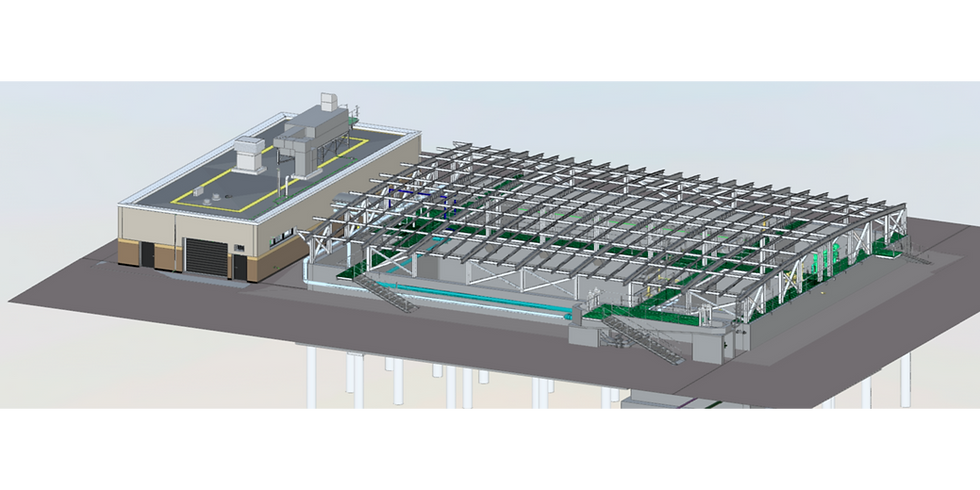
Our wastewater treatment facility is a good example.
The cost is significant, and the District has had to use a substantial portion of its borrowing capacity to complete necessary upgrades. It isn't the kind of infrastructure most people get excited about, but it is still infrastructure we have a responsibility to maintain.
Protecting public health, worker safety, and the environment isn't something I am prepared to compromise because the work is expensive or unpopular.
That same thinking is why I supported delaying Fire Hall #2 upgrades while we get a clearer picture of the final wastewater project costs and protect our borrowing capacity.
Responsible financial management doesn't always mean spending less.
Sometimes it means proceeding with something expensive because it needs to be done, and sometimes it means waiting because doing everything at once isn't financially responsible.
The harder conversations are often about services that aren't basic infrastructure but are still important to the community.
Recreation is a strong example.
Residents have consistently told us that recreation and quality of life matter in Sparwood. Our recreation facilities are heavily subsidized through taxation, and I have supported that because it reflects what I have heard from the community.
Community organizations are another example. Many of our local non-profits, recreation organizations, and community groups are part of what makes Sparwood what it is, and I don't want to undermine that. Supporting them, however, doesn't mean we should never examine how municipal funding is allocated.
Our larger Category 1 community funding requests are worth periodically reviewing. Organizations receiving substantial taxpayer support should be able to demonstrate the community benefit that funding provides, and Council should be willing to ask whether other funding sources are available.
The library is an example worth exploring.
I strongly support having a library in Sparwood. The question isn't whether libraries are valuable. It is whether the municipality should always be expected to carry the same share of the cost, or whether additional provincial or other funding opportunities could reduce the burden on local taxpayers.
Those are legitimate conversations to have. Asking whether something can be funded differently isn't the same as saying recreation, libraries, non-profits, or community organizations aren't valuable or shouldn't exist.
Services residents value
Solid waste and recycling
I strongly believe we also need to continue the conversation about garbage and recycling.
Curbside recycling was something residents asked for, and I supported introducing it. The current system alternates garbage and recycling collection every other week, and we now have enough experience with that system to continue asking residents how well it is working.
There are several options.
We could maintain the current alternating system, examine what it would cost to keep biweekly recycling while returning garbage collection to weekly service, or, once the existing collection contract allows it, examine whether residents would prefer weekly garbage collection without curbside recycling.
There may be other options as well, including strategically located additional solid-waste capacity.
None of those choices is free. If residents want a higher level of service, Council should be clear about what it costs.
If residents would rather accept a different service level to control costs, that should be part of the conversation too.
I don't want to decide that discussion before residents have had it.
THE QUESTION ISN'T JUST SERVICE
It's service + cost
What level of service do residents want?
What does each option cost?
What trade-off are residents prepared to make?
When other governments send us the bill
Another pressure on municipal budgets is work created by other levels of government.
When the Province changes legislation or creates new planning and reporting requirements, municipalities still have to complete the work.
That can mean updating an Official Community Plan, undertaking additional studies, changing bylaws and processes, or adding staff capacity to meet legislated deadlines. Those costs eventually have to come from somewhere.
I think Council needs to be extremely aggressive in advocating for Sparwood when provincial or federal decisions create costs locally.
Our residents contribute substantially to provincial and federal revenues. When senior governments create new obligations for municipalities, I believe funding should follow those responsibilities rather than simply passing another cost down to local taxpayers.
More importantly, we should continue making the case for investment in the East Kootenay and the Elk Valley. If funding is available for infrastructure, housing, recreation, public safety, or other community priorities, I want Sparwood fighting for its share.
Accountability for Council spending too
ACCOUNTABILITY STARTS WITH COUNCIL
If taxpayers pay for a conference, Council should report back on what Sparwood received from that investment.
Public money. Public accountability.
Council should apply the same scrutiny to its own spending that it expects elsewhere in the organization.
Conferences are one example. There can be real value in attending them through education, meetings with provincial representatives, advocacy for local priorities, and learning what other municipalities are doing.
But if a member of Council attends a conference at public expense, residents should be able to see what Sparwood received from that investment.
I would support requiring councillors who attend conferences to provide a report outlining what they attended, what they learned, what advocacy occurred, and how the community benefited.
If we're asking everyone else to demonstrate value for taxpayer dollars, Council shouldn't exempt itself.
Be honest about the trade-offs
I can't promise that your municipal taxes will never increase.
Anyone making that promise also needs to explain what they're prepared to stop doing when the cost of providing existing services increases.
What I can commit to is asking the hard questions before supporting an increase:
-
turn over every stone
-
challenge new spending
-
look for efficiencies
-
question whether work needs to happen now
-
make sure new permanent costs have a clear justification
-
seek grants and outside funding wherever possible
I will also continue advocating aggressively when senior governments create costs or when funding opportunities exist.
If an increase is still necessary after doing that work, then I should be prepared to explain why.
Communicating those decisions
I also don't want to suggest that Council's decisions are being made somewhere residents can't see them, because they aren't.
Budget deliberations and Council decisions happen publicly. Agendas and supporting documents are available, meetings can be watched live, recordings remain available afterward, and we've added Council newsletters, the District app, social media, and other ways of getting information into the community. Council meetings are also carried on local cable.
The information is there.
The harder challenge is that most people understandably aren't going to spend their evenings watching Council meetings or reading a hundred-page agenda package. That's where I think we can communicate better.
I want us to continue finding ways to explain major decisions in plain language:
-
what Council decided
-
what it costs
-
why we did it
-
what alternatives were considered
-
what it means for residents
That doesn't mean everyone will agree with every decision, but residents should have a reasonable opportunity to understand how we got there without having to become municipal-government experts themselves.
That is the standard I want to keep working toward.
Affordability at the municipal level isn't about pretending Council controls the cost of living.
It's about taking responsibility for the costs we do control, protecting the services and infrastructure Sparwood relies on, looking hard for savings before asking residents for more, and being straight with people about the choices in front of us.
PLAIN-LANGUAGE DECISIONS
What did Council decide?
What does it cost?
Why did we do it?
What alternatives were considered?
What does it mean for residents?
Look hard for savings before asking residents for more - and be straight with people about the choices in front of us.
Urban Wildlife Management
We cannot eliminate the risk of living alongside wildlife, but we can take reasonable steps to prevent conflict, improve reporting, and reduce the risk to both people and wildlife.
Urban wildlife management needs to be a priority for the next Council.
Sparwood is surrounded by wildlife habitat. Bears, elk, deer, cougars, and other wildlife are part of living where we do, and no municipal government can promise that wildlife will never enter the community.
That doesn't mean we accept preventable conflict.
This year, urban wildlife generated more public engagement with me than any other issue I have dealt with during my four years on Council. That got my attention.
Residents asked us to take this seriously. I intend to.
If someone is seriously injured by wildlife and there were reasonable preventative measures available to us that we simply chose not to explore, I would consider that a failure.
Having a bear become food-conditioned, create a public-safety risk, and ultimately have to be destroyed is a failure too.
Our objective should be preventing both outcomes wherever reasonably possible.
Start with prevention
The District doesn't manage wildlife populations.
That responsibility sits primarily with the Province and the Conservation Officer Service.
Where the District can have a much greater role is prevention.
That means looking seriously at the things within our control:
-
attractants
-
garbage storage and collection
-
public spaces
-
commercial waste
-
fruit trees and other food sources
-
education
-
bylaws
-
enforcement community design
I don't want us ruling options in or out before doing the work.
Some ideas may prove too expensive, ineffective, impractical, or create other problems. Others may make a meaningful difference.
Our job is to find out.
Don't decide the answer before doing the work
Our move to alternating garbage and recycling collection has understandably become part of the bear discussion.
It is reasonable to ask whether storing garbage for longer periods contributes to wildlife conflict.
It isn't responsible to simply assume that it is the only reason we experienced increased bear activity.
Garbage may be part of the problem, and we need to investigate it. There may also be other factors affecting bear activity, including natural food availability, weather and drought conditions, other attractants within the community, and broader conditions outside Sparwood.
We shouldn't pick one explanation before doing the work.
That means looking at the options and understanding both their effectiveness and their cost.
-
Could weekly garbage collection reduce risk, and what would it cost?
-
Would bear-resistant carts make a meaningful difference?
-
Could strategically located secure communal bins help?
-
What options could work for households that legitimately don't have a safe or practical way to secure their garbage between collection days?
-
Are there other attractants we are focusing too little attention on?
-
Do our bylaws and enforcement tools need to change?
Those questions should be answered with evidence, cost information, expert advice, and community input rather than whichever explanation happens to be most popular on Facebook.
There is a shared responsibility
Council can improve systems, but residents also have a role.
Garbage isn't the only attractant. Fruit, pet food, bird feeders, compost, barbecues, and other food sources can all contribute to wildlife becoming comfortable around people.
Education should come first, and we need to make reasonable compliance achievable.
Not every household has the same circumstances. Some properties don't have a garage, shed, or suitable storage area. Some residents may have legitimate physical or other limitations that make particular storage solutions impractical.
If we're going to expect people to secure attractants, we also need to understand where legitimate barriers exist and explore practical ways to address them.
But there is a difference between someone who can't reasonably comply and someone who simply won't.
Where a reasonable solution exists, someone has been warned, and they repeatedly refuse to manage an attractant that is creating a wildlife and public-safety problem, I am prepared to support enforcement.
Keeping wildlife wild requires effort from the District and from all of us who live here.
Formal reporting matters
One of the biggest lessons from this year's discussion was the difference between the level of concern in the community and the number of incidents being formally reported.
We were seeing significant discussion about bears while the number of formal complaints reported through the Conservation Officer Service remained very low.
Posting a warning on Facebook can help your neighbours know there is a bear nearby, and I appreciate residents looking out for one another.
But it doesn't replace formal reporting.
The Conservation Officer Service relies on reports to understand where conflicts are occurring, identify repeat locations and behaviours, assess public-safety risks, and determine an appropriate response.
If there is a wildlife conflict that should be reported, make the report.
We need the formal data to reflect what is actually happening in Sparwood.
Better reporting also gives us something measurable.
Instead of relying on how busy social media feels in a particular year, we can start looking at actual reported encounters, where they are occurring, and whether the measures we introduce are making a difference.
There is a point where municipal responsibility ends.
The District can work on prevention. We can manage municipal waste systems and property, establish appropriate bylaws, educate, enforce the rules within our authority, collect information, and advocate.
When wildlife presents a public-safety risk, the Conservation Officer Service has the expertise and authority to determine the appropriate wildlife response.
I don't want Sparwood trying to duplicate that role.
I want us doing everything reasonably within our own authority while advocating aggressively when provincial resources, programs, or policies affect our ability to manage wildlife conflict locally.
If we need more provincial support, I expect us to ask for it.
The Province has responsibilities too
The amount of public engagement on this issue reinforced something else for me.
People care deeply about it, and often for different reasons.
-
Some are worried about their children walking to school or their pets.
-
Some have had bears in their yards.
-
Some are concerned that bears will ultimately be destroyed because of human behaviour.
-
Some are frustrated with garbage collection.
-
Others believe the collection system is being blamed without enough evidence.
Those are legitimate disagreements.
Being awful to your neighbour because they see the issue differently doesn't help solve any of them.
I am grateful when residents raise concerns, including when they disagree with me. I will listen to criticism delivered respectfully.
I also think we have an opportunity in Sparwood to expect something better from ourselves than the hateful exchanges that have become common online.
The rest of the world can do what it wants.
We can choose to do better here.
How we talk to each other matters
What does success look like?
I don't want success measured by how many Facebook posts we make, signs we install, or meetings we hold.
-
I want fewer human-wildlife conflicts.
-
Better formal reporting can give us a meaningful baseline and allow us to track whether encounters are actually decreasing over time.
-
Then we need to be willing to follow the evidence.
-
If better waste infrastructure is justified, consider it.
-
If our bylaws need strengthening, strengthen them.
-
If enforcement is necessary, use it.
-
If education is working, keep doing it.
-
If Bear Smart practices or other proven approaches make sense for Sparwood, put them on the table.
And if the evidence tells us something we assumed was the problem actually isn't, be willing to say that too.
Why spend tax dollars on this?
If someone asks me why Council should spend their tax dollars on urban wildlife management when bears have always lived here, my answer is pretty simple.
Because you and your neighbours asked us to take it seriously.
This issue generated more engagement with me than anything else during my four years on Council. I don't think it would be responsible to hear that level of concern and then carry on as though nothing happened.
More importantly, this is about life safety.
We cannot eliminate the risk of living alongside wildlife, and I won't pretend that we can.
But if reasonable measures can reduce the likelihood of someone being hurt, reduce human-wildlife conflict, and reduce the number of bears that ultimately have to be destroyed, I believe we have a responsibility to explore them.
You asked us to look at this. I intend to deliver on that.
You asked us to take this seriously.
I intend to.

DON'T START WITH THE ANSWER
Identify the problem.
Look at the evidence.
Understand the options and costs.
Then decide what makes sense for Sparwood.
SEE A WILDLIFE CONFLICT?
REPORT IT.
BC Conservation Officer Service
Report All Poachers and Polluters (RAPP)
1-877-952-7277
Social media can warn your neighbours.
Formal reporting creates the record.
WE CAN DISAGREE WITHOUT BEING AWFUL TO EACH OTHER
Different concerns.
Different perspectives.
Same community.
We can choose to do better here.
Recreation & Community Infrastructure
Protect what we have, improve what we reasonably can, keep the long-term vision alive, and be ready when funding makes more possible.
Recreation is part of the heart of Sparwood.
It is also expensive.
I don't think we serve residents well by pretending one of those statements matters more than the other.
Over the last two years, I had the opportunity to chair the Recreation Facility Advisory Committee. What I am proudest of isn't that we came up with a grand vision for a new building. It is how seriously the entire committee took the responsibility Council gave us.
The committee included members of Council, residents from the community, and key District Staff who could bring important information into the discussion - including the District's financial position, facility condition assessments, previous studies, and work already completed on recreation planning.
We worked together, listened to user groups and the broader public, reviewed the condition of our existing facilities, worked through different options, looked at costs, and challenged what was realistic.
We didn't rush it.
And we didn't allow what any of us might personally want today to outweigh what we believed was best for Sparwood over the long term.
The process included extensive community engagement:
-
household surveys
-
meetings with organizations and user groups
-
public events
-
opportunities for individual residents to participate

What the community told us
There is clearly an appetite for more indoor recreation opportunities.
Among the new spaces considered in the engagement, a community gymnasium or flexible multi-sport facility received the strongest support, followed closely by an indoor walking and running track.
Those ideas make sense to me.
If money were no issue, I would love to see a long-term facility with two court surfaces, a walking track, flexible community gathering space, and the ability to serve Sparwood for generations.
But money is an issue.
That is the reality we have to govern within.
Then continue:
Sparwood has had the benefit before of major private investment in recreation infrastructure. If another major company, organization, or donor came forward prepared to substantially change the economics of a new facility, I would absolutely want us prepared to explore that opportunity.
Without that kind of outside investment, we have to be realistic about what our community can afford.
I stand behind the RFAC recommendation
After all of that work, the committee reached a unanimous recommendation.
Maintain, renovate, and upgrade our existing recreation facility, with a focus on creating a community gathering area, while continuing to explore a new building in the future as a regional initiative with neighbouring communities.
I stand behind that recommendation.
It wasn't the biggest option we could imagine.
It was the consensus reached after Council members, residents, and District Staff spent considerable time looking at the evidence, listening to the community, considering the condition of our existing facilities, understanding the District's financial realities, and asking what made sense for Sparwood.
That matters to me.
The committee's work showed support for facility and program expansion while also recognizing the need to prioritize essential replacement and remediation so the existing facility can continue operating.
Those aren't competing ideas.
We can continue improving what we have while keeping a longer-term vision alive.
The existing recreation centre isn't going anywhere tomorrow.
So part of the next Council's responsibility should be getting as much value as reasonably possible from it.
That means having a realistic rehabilitation plan, completing necessary repairs and upgrades, looking for renovations that improve how the building can be used, and maximizing the programming we can offer within the space available.
Accessibility has to be part of that work.
The elevator installed this year is an example of an improvement that makes an existing community facility more accessible and useful without requiring us to replace the entire building.
That doesn't mean renovations are painless. There is almost never a convenient time to renovate a busy recreation facility, and some of the recent work around the arena lobby certainly wasn't ideal for ice users while it was happening.
But maintaining an aging facility means doing work while people are still using it.
The important part is planning it properly, communicating it well, and making the investment count.
Get everything we can out of the facility we have
Keep the long-term vision alive
Supporting the RFAC recommendation doesn't mean giving up on a future facility.
Quite the opposite.
I want us continuing to build the financial and planning foundation that could eventually make something larger possible.
We already put money aside for future recreation investment. I want to continue growing that reserve.
I want projects and concepts developed far enough that when a major grant, partnership, or funding opportunity appears, Sparwood is capable of acting on it.
I want us talking to neighbouring communities and regional partners about opportunities that genuinely make sense regionally.
And I want us continuing to look for major private partners.
What I don't support is putting an enormous tax or debt burden on today's residents simply because we can draw something impressive on paper.
We have major infrastructure obligations ahead of us. Wastewater and fire protection are municipal responsibilities that have to be accounted for. Recreation matters enormously to our quality of life, but those mandatory obligations don't disappear because we want something else.
Once we understand those commitments, residents deserve to be part of the conversation about what they are willing to invest in recreation.
BUILD THE FOUNDATION NOW
Reserve funding -> Plans ready -> Grants + partnerships -> Opportunity
Be ready when something changes what Sparwood can afford
Regional facilities should involve regional conversations
Our recreation facilities aren't used exclusively by people who live inside Sparwood's municipal boundary.
That makes regional partnerships worth pursuing.
If a future facility would serve the broader area, I think it is reasonable to explore whether neighbouring communities, the regional district, major employers, or other partners can participate in making it possible.
But I don't want that conversation approached as Sparwood versus its neighbours.
We live, work, shop, recreate, and raise families across the Elk Valley. Alienating neighbouring communities while trying to build a regional partnership would be counterproductive.
At the same time, Sparwood residents already contribute substantially through their municipal taxes to operate our facilities.
Where it is reasonable and practical, I think residents who are carrying that tax burden should receive appropriate benefits through access and user-fee structures.
That balance is worth continuing to examine
REVIEW, DON'T REOPEN EVERY YEAR
EVERY 3-5 YEARS
What does it actually cost?
How much is supported by taxation?
Is the fee structure still fair?
Does it still reflect what residents value?
The goal isn't full cost recovery.
It's understanding whether the investment still provides good value.
Keep reviewing what recreation costs
Council recently completed a review of recreation fees and charges. I don't think we need to reopen that discussion every year.
I do think it should happen on a regular cycle - perhaps every three to five years - so Council understands what services actually cost, how much is being subsidized through taxation, whether the fee structure remains fair, and whether it still reflects what residents value.
The objective shouldn't be to make every recreation program pay for itself.
If that were the standard, we would fundamentally change what community recreation looks like.
The objective should be understanding what we're spending, who benefits, and whether residents continue to believe that investment provides good value.
Centennial Plaza is a good example of why I don't believe we should wait until money becomes available before figuring out what we want.
The potential new stage wasn't an idea this Council suddenly invented. It grew out of years of planning and earlier community engagement around Centennial Plaza.
The project was ultimately deferred when construction costs came in substantially higher than expected, and District Staff were directed to pursue grant opportunities.
Now there is an opportunity for up to $650,000 through the Columbia Basin Trust GATHER program. The grant is specifically for this project. It isn't $650,000 that Council could simply redirect to another municipal priority.
The current project estimate is approximately $1.475 million, so even with the maximum grant, there would still be a substantial local cost.
Getting the grant and deciding to proceed with the project are not the same decision. That distinction matters.
If we spend two years debating whether we should even pursue funding, the opportunity can disappear before the community ever has a choice.
I would rather have Sparwood prepared.
-
Chase the grants
-
Understand the conditions
-
Understand our share of the cost
-
Put the complete information in front of the community and Council
Then make the decision.
If residents no longer want the Centennial Plaza stage once they understand the project and the local cost, I am prepared to support walking away from the grant.
I personally believe the stage could contribute to Sparwood's recreation, cultural, and community life for many years.
But my personal preference isn't enough reason to spend more than a million dollars of public money.
Residents need to understand what we are getting, what the grant pays for, what Sparwood still has to contribute, and what other priorities we have before the decision is made.
Be ready when funding appears
Why didn't Council just decide what to build?
The RFAC has done its job. Its recommendation has gone to Council.
The current Council could have attempted to commit future budgets and major spending based on that work.
I don't think that would have been the right approach.
A new Council will be elected for the next four years. That Council should have the opportunity to review the RFAC recommendation, understand the evidence behind it, consider the District's updated financial position and other infrastructure obligations, listen to residents, and then own the decisions it makes.
That isn't starting over.
The work has already been done.
The studies exist. The facility condition assessments exist. The financial realities were considered. Previous work was brought into the process rather than starting over. The community engagement exists. User groups were heard from. The options were examined, and the committee reached a unanimous recommendation.
The next Council has a roadmap.
THE WORK ISN'T STARTING OVER
Studies > Facility Assessments >
Community Input > Options Reviewed >
RFAC Recommendation
THE NEXT COUNCIL HAS A ROADMAP.
NOW IT HAS TO USE IT.
What does success look like?
By the end of the next term, I want us to have made visible progress rather than commissioning another round of studies that tells us what we already know.
Necessary rehabilitation of the existing recreation facility should be planned, underway, or completed.
We should continue building the recreation reserve so future residents aren't starting from zero.
We should pursue every reasonable grant, partnership, regional contribution, and private funding opportunity that could change what Sparwood can realistically afford.
We should continue improving accessibility and make practical renovations that allow us to get more programming and community use out of the facilities we already own.
And if new funding creates an opportunity for something larger, we should be ready to act rather than starting the planning process from scratch.
I would love the grand vision.
Two courts. A walking track. Flexible space. A facility designed to serve Sparwood for generations.
But wanting something and being able to responsibly pay for it are two different things.
My responsibility isn't to promise the biggest building.
It is to take the work residents, District Staff, Council, and the RFAC have already done, protect what we have, improve what we reasonably can, keep the long-term vision alive, and be ready when an opportunity comes along that makes more possible.
That is how I think we move recreation forward without losing sight of everything else Sparwood has to pay for.
Protect what we have. Improve what we realistically can. Keep the long term vision alive.
RFAC'S UNANIMOUS RECOMMENDATION:
MAINTAIN + RENOVATE + UPGRADE
KEEP THE LONG-TERM VISION ALIVE
Improve what we have today. Plan responsibly for what could come next.
Infrastructure &
Responsible Growth
We don't need to reinvent something that has served this community extremely well. We need to understand it, challenge it where appropriate, and continue being responsible stewards of it.
Sparwood is in an enviable position when it comes to infrastructure and asset management. That didn't happen by accident, and I don't say it because of something this Council suddenly accomplished.
Previous Councils and District Staff established a strong culture of long term infrastructure planning and asset management well before I was elected. I benefited from having experienced members of Council explain that approach to me when I arrived, and my responsibility during this term has been to help protect and continue it.
There will be a number of new faces around the Council table after this election. With only three incumbents seeking another term on Council, there will be a significant transfer of knowledge and experience regardless of the election results.
If I am one of the returning members, I see part of my responsibility as doing for the new Council members what the experienced councillors did for me - helping them understand the long-term planning behind our infrastructure decisions and why protecting that discipline matters.
We don't need to reinvent something that has served this community extremely well. We need to understand it, challenge it where appropriate, and continue being responsible stewards of it.
Infrastructure management isn't very exciting when it is working. You notice it when it isn't - when roads aren't maintained, sewer systems fail, water infrastructure isn't reliable, a fire hall can no longer properly support the equipment and people it needs to house, or an asset reaches the end of its life without anyone having planned for what comes next.
Sparwood has spent years trying to stay ahead of those problems. I want us to protect that legacy.
Maintain what previous Councils built for us
I think Sparwood should be proud of the condition of our infrastructure and the way we manage our assets. That doesn't mean everything is new or that we don't have significant investments ahead of us. Quite the opposite.
Strong asset management means knowing what you own, understanding its condition, anticipating when it will need major maintenance or replacement, putting money aside, and making decisions before failure makes the decision for you.
That approach needs to continue across our roads, water and sewer systems, stormwater infrastructure, sidewalks, buildings, fleet, recreation facilities, and other municipal assets. Today's Council isn't only responsible to today's taxpayers. We're responsible for what we leave behind too.
Wastewater is an example of why long term planning matters
The Wastewater Treatment Facility upgrade is a major investment, but it is also necessary.
The existing oxidation ditch was constructed in 1968 and is beyond its expected useful life.
The District began investigating the need for an upgrade in 2008, well before I was elected to Council. The project addresses aging infrastructure, regulatory requirements, worker and public safety, environmental protection, capacity for future growth, and reliability.
One of the less obvious benefits is redundancy.
Our existing secondary treatment system has one oxidation ditch and one clarifier. The upgraded system provides multiple treatment units and greater redundancy so treatment can continue when equipment needs maintenance or is unavailable.
That matters because wastewater infrastructure isn't something we can simply shut down for a week when equipment fails.
Recent events elsewhere in the Elk Valley have also been a reminder of how important resilient wastewater infrastructure is.
Fernie's circumstances and system are different from ours, and I don't think it is fair to use another community's challenges as a criticism. But when extreme conditions put critical infrastructure under pressure, redundancy, capacity, maintenance, and preparation suddenly become very real issues.
Nobody gets excited about spending millions of dollars on wastewater treatment, but protecting public health, our workers, the environment, and the basic infrastructure the community depends on is exactly the kind of responsibility municipal government exists to handle.
Planned before failure
makes the decision fur us.
Fire Hall #2 needs a long term solution
Fire Hall #2 already exists in Sparwood Heights.
The question isn't whether Sparwood needs a second fire hall. The question is what we do with an existing facility that no longer meets the long-term needs of a modern fire service.
This isn't a new issue.
The District has documented discussions about Fire Hall #2 going back many years, and the project has been part of long-term capital planning.
The existing facility doesn't provide adequate space for modern apparatus, equipment isolation and cleaning, washroom and shower facilities, storage, or sufficient working space around vehicles for equipment and safety checks. An apparatus intended to be housed there under an agreement with the RDEK has instead had to be housed at Fire Hall #1 because of the limitations of the building.
There is also an important health and safety component.
Firefighters can be exposed to contaminants through the work they do, and British Columbia recognizes numerous cancers as presumptive occupational diseases for firefighters. A modern fire hall needs to support the separation and cleaning of contaminated equipment and provide responders with appropriate facilities to clean up after calls. Those equipment isolation, cleaning, shower, and washroom deficiencies have already been identified at Fire Hall #2.
I supported delaying a major investment in the hall while we gained greater certainty around the Wastewater Treatment Facility and the impact that project would have on our borrowing capacity.
That wasn't because I don't support investing in Fire Hall #2. I do.
Once we have a clearer financial picture, I believe the next Council needs to determine the right long-term solution - whether that is a significant upgrade and expansion of the existing hall or a rebuild that provides better long-term value.
Either way, this will be a major investment in Sparwood, and it needs to be treated that way.
The solution needs to provide appropriate apparatus storage, support the health and safety of our responders, meet our community protection needs and regional commitments, and serve Sparwood for decades rather than simply patching a building that no longer meets our needs
Growth should contribute to growth
I support the principle that new development should contribute toward the infrastructure required to support it.
That is part of why I support Development Cost Charges when they are structured reasonably.
But there is another side to infrastructure and growth.
We shouldn't automatically borrow millions of dollars to install services simply because land might eventually develop. Someone has to carry that debt until development occurs, and that someone is ultimately the taxpayer.
There are situations where building infrastructure early makes sense. It will never be as cheap to build as it is today, and getting ahead of development can make Sparwood much more attractive to someone ready to invest. But timing matters.
If developers or landowners are demonstrating real interest and servicing land can unlock development, I am prepared to consider moving proactively.
If there is no demonstrated demand and no reasonable expectation of recovering that investment in the near term, taxpayers shouldn't automatically be expected to carry the debt while we wait for development and eventual latecomer contributions.
That is the balance I want us to maintain.
Prepare for where Sparwood grows next
There are infrastructure investments we already know may become important as Sparwood grows.
Water looping and connections toward the west end of Sparwood along Highway 3 can support future development and strengthen the network. Future residential growth around Whiskey Jack will eventually require additional reservoir capacity, and further residential growth in Sparwood Heights will create additional infrastructure requirements as well.
Those projects shouldn't happen simply because they appear on a future map, but they should be planned.
If we wait until a developer is standing at the counter ready to build before we begin thinking about water capacity, connections, reservoirs, roads, or other infrastructure, we are already behind. The engineering, financial planning, land considerations, and potential funding mechanisms should be understood early enough that Council can move when the timing makes sense.
There is an important difference between being prepared to build and building too early. I want us prepared.
Mandatory infrastructure comes first
This connects directly to my position on recreation and municipal spending.
Wastewater treatment, fire protection, and safe and reliable water and sewer infrastructure are not optional. Maintaining the infrastructure necessary to protect public health, life safety, the environment, and the basic operation of the community has to come first.
That doesn't make recreation unimportant. Recreation is part of the heart of Sparwood, and I support continuing to invest in it.
But when Council is deciding how much debt the community can responsibly carry, mandatory infrastructure obligations have to be understood before we commit ourselves to major discretionary projects.
That isn't saying no to recreation. It is making sure we understand what we have to pay for before deciding what else we can responsibly afford.
Be ready for opportunities
Not every infrastructure project has to be funded entirely by Sparwood taxpayers.
Senior government grants, partnerships, developer contributions, and other funding opportunities can change what is possible and when it makes sense to proceed. But those opportunities often come with timelines, eligibility requirements, and expectations that a municipality already understands what it wants to accomplish.
That means doing the work before the opportunity arrives.
We should know which projects are coming, have reasonable estimates of what they will cost, understand what planning or engineering is still required, and know which projects could move if outside funding becomes available.
Being prepared doesn't mean committing to build everything on a list. It means not losing an opportunity because we waited until the funding announcement to start figuring out what we needed.
BE READY BEFORE THE OPPORTUNITY ARRIVES
PLAN -> UNDERSTAND THE COST -> BE READY TO MOVE
OUTSIDE FUNDING CAN TURN A FUTURE PROJECT INTO A CURRENT OPPORTUNITY.
Timing matters
There will always be more infrastructure work that could be done than there is money available to do it all at once.
Responsible asset management means understanding what condition our infrastructure is in, what is approaching the end of its useful life, where growth is creating new demands, and what can reasonably wait. It also means looking for opportunities to coordinate work so we aren't rebuilding the same road or disturbing the same area multiple times because projects were planned in isolation.
Some projects will need to move because the risk of waiting is too high. Others may make more sense when grant funding becomes available, when development creates the demand, or when another planned project creates an opportunity to complete the work more efficiently.
Council's job is not simply to decide whether an infrastructure project is a good idea. Most of them are. The harder question is when it needs to happen, how it should be paid for, and what else has to be considered alongside it.
Protect the infrastructure legacy we inherited
PROTECT WHAT WE INHERITED.
PLAN FOR WHAT COMES NEXT.
Sparwood is fortunate to have significant infrastructure already in place.
Previous Councils and generations of residents made investments that continue to serve this community today. That creates an obligation for us to look after what we inherited rather than allowing it to deteriorate and leaving a much larger bill for the people who come after us.
Asset management is not the most exciting part of municipal government. Replacing underground infrastructure before it fails, maintaining facilities, planning for equipment replacement, and putting money aside for future work rarely generate much attention. But failing to do those things eventually does.
I want Sparwood to continue making disciplined investments in maintaining and renewing what we already own while planning carefully for what we will need next.
The goal should be straightforward: leave the next Council, and the next generation of residents, with infrastructure that is at least as well managed as the infrastructure that was entrusted to us.
What does success look like?
Success means Sparwood continues to grow without losing control of the infrastructure that supports the community.
It means completing the wastewater treatment work we are required to do, addressing the long term needs of Fire Hall #2, and maintaining the water, sewer, roads, facilities, and other infrastructure residents rely on every day.
It means planning early for future growth so that when development happens, we understand what infrastructure will be required and how it can reasonably be funded.
It means using development contributions, grants, reserves, and borrowing responsibly rather than automatically placing every new cost on existing taxpayers.
It means maintaining what previous generations built for us while making thoughtful investments in what the next generation will need.
Most importantly, it means making infrastructure decisions based on need, risk, timing, and affordability - not simply because a project is exciting or because funding happens to be available.
That is how we protect the community we have while preparing responsibly for the Sparwood that comes next.
Infrastructure that lasts. Growth we are ready for. Investment we can afford.
Apparatus Storage.
Responder Health & Safety.
Community Protection.
Long Term Value.
GROWTH SHOULD CONTRIBUTE TO GROWTH
REAL DEMAND + INFRASTRUCTURE UNLOCKS DEVELOPMENT:
Consider moving proactively
NO DEMONSTRATED DEMAND:
Don't automatically put the debt on today's taxpayers
PLAN AHEAD.
BUILD WHEN THE TIMING MAKES SENSE.
Emergency Preparedness & Community Resilience
When the disaster happens, it is too late to start preparing for it.
That principle has been reinforced throughout my career in emergency response, and it shapes how I look at emergency preparedness as a member of Council.
We live in a community surrounded by mountains, forests, rivers, creeks, major highways, rail, industrial operations, and critical infrastructure.
Wildfire is an obvious risk, but it isn't the only one. Flooding, severe weather, prolonged power outages, transportation disruptions, industrial emergencies, and the loss of critical infrastructure all have the potential to affect Sparwood.
We can't prevent every emergency, but we can decide how prepared we are when one happens.
Lladnar Creek was close enough

The Lladnar Creek wildfire in 2023 should remain fresh in our minds.
The fire started on July 21 and affected our community for more than a month.
At its height, evacuation alerts covered Sparwood Heights south of Sparwood Heights Drive, Upper and Lower Matevic Road, and additional properties in the surrounding RDEK area. An Incident Command Post was established at the Recreation and Leisure Centre while crews from across the province worked the fire.
We were fortunate, but fortunate isn't a preparedness strategy.
We should take what we learned from that event and continue strengthening our prevention, planning, training, communications, and response capabilities before the next event happens.
Photo: Steve Kallies
Prevention is an investment
FireSmart is one part of that work.
Sparwood has been building its local FireSmart program around education, vegetation management, emergency planning, cross-training, interagency cooperation, legislation and planning, and development considerations.
The provincial funding environment has changed, including changes to how some FireSmart and fuel-management activities are funded.
I believe the Province has a responsibility to adequately support communities doing this work, and I am prepared to advocate strongly for that support.
But knowing another level of government should be doing more doesn't help us when the mountain is on fire.
If outside funding isn't available and our professional staff identify necessary prevention or mitigation work that protects people or critical infrastructure, I am prepared to consider investing local dollars to do it.
That doesn't mean writing a blank cheque.
It means understanding the risk, following FireSmart principles, using professional advice, looking for every available outside funding source, and making an informed decision about what happens if we don't do the work.
Prevention costs less than recovery.
Understand the risk. Follow the evidence. Invest before the emergency.
Community support matters
Wildfire mitigation can involve difficult decisions, especially when vegetation or trees are involved.
I don't think Council should be deciding which trees need to come down based on personal opinions. Those decisions should be informed by people who understand wildfire behaviour, fuel management, forestry, and emergency response.
Community engagement and education also have to be a major part of the process.
If professional advice tells us mitigation work is necessary, residents deserve to understand what is being proposed, why it is being recommended, what risk it addresses, and what alternatives were considered.
The same thinking applies to private property.
Education and voluntary FireSmart improvements should remain a major part of the approach, but I am open to incentives that encourage residents and developers to build more resilient properties.
For new construction, I am also prepared to explore whether reasonable FireSmart requirements should eventually be incorporated into our bylaws or development requirements.
That is similar to the discussion we need to have around wildlife attractants. If we know from the beginning that a new home needs secure garbage storage, or that particular design choices can substantially improve wildfire resilience, it makes sense to ask whether those considerations should be incorporated when the property is being built rather than trying to retrofit everything later.
I don't have the final answer on what those requirements should look like, but I think they are worth examining.
Flooding is part of preparedness too
Wildfire gets enormous attention, but water can be every bit as destructive.
The Elk River and Michel Creek are part of our community, and Sparwood's planning framework recognizes flooding, erosion, slope instability, and the 1-in-200-year floodplain around the Elk River and its tributaries as hazards that have to be considered.
We have already seen what proactive flood mitigation can look like.
Work on the Elk River near the Lower Matevic pedestrian bridge began before my time on Council. In 2020, the previous Council authorized a $750,000 grant application for bank stabilization because erosion was threatening the south bank, infrastructure attached to the bridge, and pedestrian access west of the railway.
During this term, Council provided the additional funding needed to move the work forward, and major riverbank stabilization construction at the south abutment began in September 2023.
The work is about more than protecting a pathway. Critical municipal infrastructure crosses that area, and continued erosion can also threaten our ability to access and maintain it.
The risk hasn't simply disappeared because one phase of work was completed.
In 2024, Council authorized another application for up to $5 million through the Disaster Resilience and Innovation Funding Program to continue the District's flood-mitigation work.
That is the approach I support: identify the risk before failure, pursue outside funding aggressively, invest locally when necessary, complete the work we can, continue monitoring, and deal with the next vulnerability before it becomes an emergency.
Flood resilience also extends beyond the municipal boundary.
A flood doesn't have to put downtown Sparwood underwater to affect us. Damage to a bridge, Highway 3 or Highway 43, rail, power, communications, or other regional infrastructure can interrupt the movement of food, fuel, medicine, equipment, workers, and emergency resources into and out of the Elk Valley.
Preparedness means thinking beyond the immediate hazard and asking what happens next.

Critical infrastructure needs to remain critical when things go wrong
We use the term "critical infrastructure" for a reason.
Water, wastewater, communications, transportation, emergency services, power, and the facilities needed to coordinate a response become even more important during an emergency.
Not all of that infrastructure belongs to the District. The electrical system is an obvious example, but Council still has a responsibility to consider what happens locally when those systems fail.
Where municipal facilities are necessary to maintain community operations during an extended outage, backup systems matter. In 2026, for example, the District moved forward with replacement of the emergency backup generator at the Municipal Office.
The question isn't simply whether the lights stay on at Municipal Hall. It is whether the facilities, systems, communications, and people needed to support the community can continue functioning when the normal systems don't.
That needs to remain part of our capital planning.
Water. Power. Communications. Transportation. Emergency services.
Planning needs to involve the people we may depend on
Emergency management doesn't work particularly well in organizational silos.
The District has professional staff responsible for emergency planning and response, and Council shouldn't be trying to run an emergency operation.
Our job is to make sure the people responsible for that work have the plans, training, relationships, equipment, and resources they reasonably need. The District's emergency program already includes establishing and exercising plans for natural and human-caused disasters.
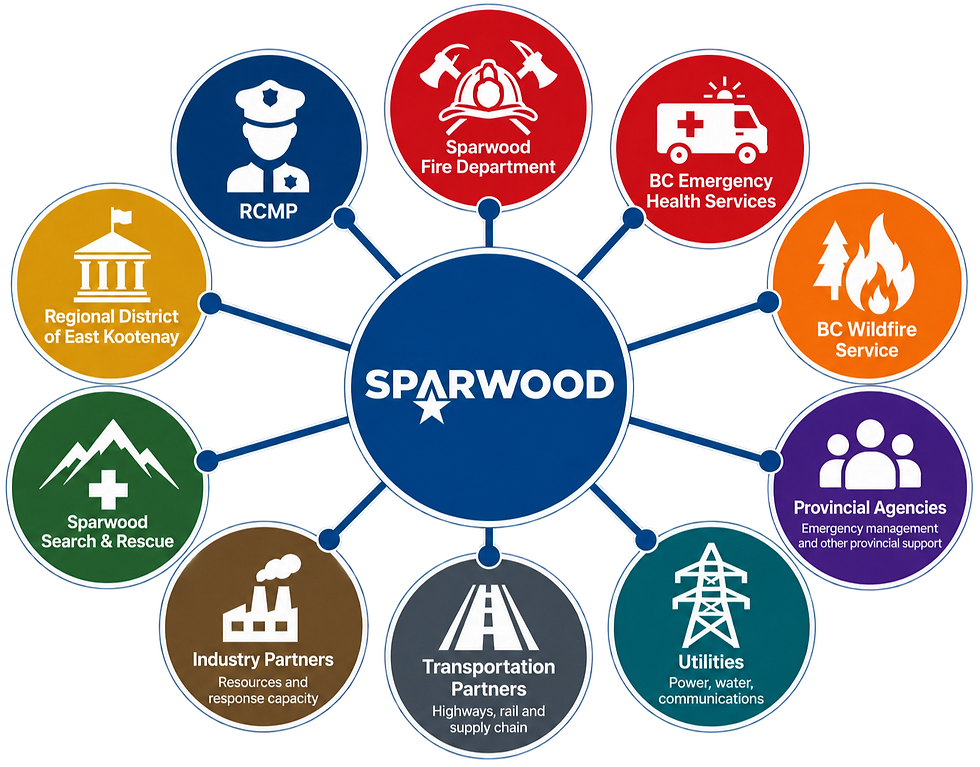
I strongly support regular emergency exercises involving the agencies and organizations we could actually find ourselves working beside during a major event.
Depending on the scenario, that could include Sparwood Fire Department, District Staff, the RDEK, RCMP, BC Emergency Health Services, BC Wildfire Service, Search and Rescue, provincial agencies, neighbouring communities, industry, utilities, transportation organizations, and others.
Our major industrial operations also have emergency plans, resources, and response capabilities of their own. I want those relationships established and exercised before we need them.
Know who has what.
Know who calls whom.
Understand what assistance is available and what each organization expects from the others.
Find the gaps during an exercise rather than when someone's life depends on the answer.
Preparedness costs money
I am prepared to support maintaining appropriate financial capacity for emergencies and investing in reasonable prevention and preparedness.
That money can sometimes be difficult to defend because preparedness doesn't always produce something people can see. There isn't necessarily a new building or a ribbon to cut.
What we are buying is capacity when something goes wrong.
The consequences of losing critical infrastructure can extend far beyond the original emergency.
Lose power and communications are affected.
Lose water and you can affect homes, businesses, and emergency response.
Lose a bridge or highway and supply chains can be interrupted.
Lose the facilities required to coordinate the response and the emergency becomes harder to manage.
British Columbia doesn't lack examples of communities that have discovered how devastating those cascading effects can be.
Lytton is perhaps the clearest. The 2021 wildfire destroyed most of the village, killed two people, displaced residents, and caused extensive damage to municipal and other critical infrastructure. Rebuilding has taken years.
We don't need to assume Sparwood will experience the same disaster to learn from it.
Prudent investment before an emergency can have an enormous impact when it matters most.
WHAT WE ARE BUYING IS CAPACITY WHEN SOMETHING GOES WRONG.
Council's role
I want to be clear about where I see Council fitting into this.
Professional staff and emergency-response agencies manage emergencies. They have the training, operational authority, plans, and expertise to do that work.
Council governs.
We decide what resources are available, approve budgets and major investments, ask whether risks are being adequately addressed, support long-term mitigation and preparedness, and advocate to other levels of government.
We also have to make sure emergency preparedness doesn't continually lose the budget argument simply because the disaster hasn't happened yet.
My own background influences how seriously I take that responsibility. I spent many years in the fire service and have experience in search and rescue, technical rescue, emergency management, and occupational health and safety.
That experience doesn't mean I should be telling our Fire Chief how to do their job.
It taught me how quickly an ordinary day can become something completely different, how dependent a successful response is on work that happened long before the call came in, and how unforgiving emergencies can be when that preparation wasn't done.
Why spend money on something that might never happen?
If someone asks why their municipal taxes should pay for emergency preparedness when we already have firefighters, emergency plans, and provincial resources, my answer is pretty straightforward.
Look at Lytton.
Look at the communities across British Columbia that have faced wildfire evacuations, floods, infrastructure failures, prolonged outages, and other disasters.
Look closer to home at Lladnar Creek.
Then think about the first question Council would rightly be asked if Sparwood suffered a major event and we were caught unprepared:
Why didn't you plan for this?
WHY DIDN'T YOU PLAN FOR THIS?
What does success look like?
Success isn't guaranteeing that Sparwood will never experience a major emergency. Nobody can promise that.
Success is having a community that is ready when something happens.
I want FireSmart and wildfire-mitigation work continuing, guided by professional advice and supported by provincial funding wherever we can get it. Where critical work is necessary and outside funding isn't available, I want Council prepared to consider whether local investment is justified rather than simply allowing the work to stop.
I want us to continue protecting infrastructure from flooding and erosion, maintaining emergency facilities and backup power, and thinking about the resilience of the systems the community depends on.
I want emergency plans exercised rather than simply filed away. I want the District, RDEK, emergency services, industry, utilities, neighbouring communities, and provincial agencies to understand how they will work together before an incident forces them to figure it out.
I want residents to know how they will receive emergency information and what is expected of them.
And I want the next Council to keep asking one important question whenever we consider cutting or delaying preparedness work:
What happens if we need this tomorrow?
We won't eliminate every risk facing Sparwood.
Our responsibility is to understand those risks, prepare for the ones we reasonably can, invest where the consequences justify it, and make sure that when something does happen, we aren't wishing we had started preparing yesterday.
Advocacy & Partnerships
Some of the most important issues affecting Sparwood can't be solved by Sparwood Council alone.
That doesn't mean they aren't our problem.
One of the things I've learned during my first term is how important it is to understand where municipal authority ends. Sometimes Council can make the decision and get the work done. Other times we need the Province, the RDEK, Interior Health, neighbouring municipalities, industry, or another partner at the table.
I don't think we serve residents well by promising that Council can deliver something it doesn't have the authority to deliver. But "it's not our jurisdiction" can't become an excuse for doing nothing either.
When an issue matters to Sparwood, I expect Council to understand who has the authority to act, build the partnerships we need, make the case, and keep pushing until we get an answer.
Sometimes that means collaboration. Sometimes it means making more noise.
Highway 3 and Highway 43 - invest in proper solutions
There are two highway intersections I want the next Council to keep pushing the Province on, and they are two different issues.
The first is Highway 3 and Sparwood Drive, by the Arrowana Restaurant and Kal Tire.
Council has continued to raise concerns about this intersection with the Province, including requesting another traffic warrant for Highway 3 and Sparwood Drive.
My position is that this intersection needs proper traffic lights.
There is another part of this discussion that I don't think gets enough attention.
Our three primary emergency-response services are concentrated very close to this intersection. Fire Hall #1, BC Ambulance, and the Elk Valley RCMP detachment are all nearby.
We have heard concerns from RCMP, BC Ambulance, and Fire about the difficulty emergency vehicles can have getting onto Highway 3. Given where those services are located, the Sparwood Drive intersection is a natural and direct access point to the highway for many responses.
This isn't only about traffic convenience.
When police, ambulance, or fire crews are responding to an emergency, getting onto Highway 3 safely and efficiently matters. That operational reality needs to be part of the case we continue putting in front of the Province.
The second location is Highway 43 and Michel Creek Road.
The District has already invested in the Michel Creek Road pathway, providing an important active transportation connection for that part of the community.
Now we need to deal properly with the intersection.
A pedestrian-controlled signal at Highway 43 would be progress, and I would support it rather than allowing the perfect solution to prevent an improvement today.
But I see that as a band-aid, not the long-term answer.
If we're going to invest in the long-term safety and function of Highway 43 and Michel Creek Road, I think we should do it properly and continue pushing for full traffic lights.
That provides proper traffic control for vehicles and pedestrians together rather than addressing only one part of the problem.
Both Highway 3 and Highway 43 are provincial highways. Council can't simply order either project built. The Province has engineering standards, traffic warrants, approval processes, and responsibility for those highways.
I understand that.
But I also don't think passing or failing a traffic warrant should end the broader conversation about how these intersections actually function in our community.
Traffic counts are one piece of the picture. Emergency response, pedestrian safety, community growth, existing and future development, access to homes and businesses, and the movement of people through the community matter too.
If the Province needs updated traffic counts, get them. If more engineering information is required, get it. Put the feedback from our emergency services in front of the people making the decisions. Keep meeting with Ministry officials, and keep raising these issues with the Minister and through UBCM.
For Highway 3 and Sparwood Drive, I want proper traffic lights.
For Highway 43 and Michel Creek Road, I'll support a pedestrian-controlled signal as progress if that is what we can get in the short term, but I want us continuing to advocate for full traffic lights as the long-term solution.
We've talked about these intersections long enough.
Let's get them fixed properly.
Douglas Fir - engage the businesses and figure out servicing
Businesses have been operating along Douglas Fir for years without the same municipal servicing available in other parts of Sparwood. This isn't a new issue. Previous District planning has looked at extending municipal servicing into the area and finding ways to fund it.
I don't think the answer is to wait until enough future development shows up before we take another serious look at it.
We should be talking to the businesses and property owners there now.
Before deciding what happens next, I want to understand what the lack of municipal servicing actually means for them.
-
What are they doing instead?
-
What does it cost them?
-
Does it limit expansion, investment, fire protection, insurance, or the types of businesses that can operate there?
-
If municipal services were available, what difference would it make?
Those answers should be part of the business case.
There is also a future-development question. Douglas Fir is an important commercial and light-industrial area, and infrastructure is part of attracting more investment. We can talk about expanding our commercial and light-industrial tax base, but businesses considering investing in Sparwood are going to care whether the property has the services they need.
Current growth planning continues to identify future water infrastructure in this area, including a watermain crossing Highway 3 between Douglas Fir Road and Sparwood Drive.
That gives us an opportunity to look at Douglas Fir as part of a larger servicing strategy rather than treating it as an isolated pipe project.
But the businesses already there need to be part of that conversation from the beginning.
The difficult part is cost.
The District can build municipal infrastructure. The question is how we fund it fairly and responsibly.
I want us to understand what servicing Douglas Fir would cost today, what the existing businesses actually need, what future development could reasonably be expected, what outside grants are available, what can appropriately be recovered through Development Cost Charges or developer contributions, and what portion makes sense for the District to carry.
Then put those options in front of the people who will actually be affected by them.
I don't want Douglas Fir servicing sitting on another plan for another decade because we're waiting for somebody else to pay 100 percent of the cost. But I also don't want Council deciding in isolation that taxpayers or existing Douglas Fir property owners should carry millions of dollars without first understanding the impact.
Start by talking to the businesses that have already been living with the problem.
Build the business case from there.
Then pursue every reasonable funding source and determine whether we can finally put together a servicing plan that works for the businesses already there, future investment, and Sparwood taxpayers.
Health care requires advocacy and partnership
Access to health care is another current Council advocacy priority.
Municipal Council doesn't operate the health-care system, hire physicians, determine provincial health policy, or control Interior Health.
That distinction matters when candidates make promises about health care.
It doesn't mean Council has no role.
We can advocate for local and regional services. We can work with Interior Health, health-care providers, neighbouring municipalities, the RDEK, and the Province. We can identify local barriers and, where there is an appropriate municipal role, consider what the District can reasonably do to help.
What I don't want to do is promise residents a particular health-care service that Council has no authority to deliver.
Our role is to make sure Sparwood's needs are heard and to be a willing partner when there is something constructive we can contribute.
Childcare matters to the community too
Childcare affects whether families can live here, whether parents can participate in the workforce, and whether employers can attract and retain people.
But this is another area where we need to be careful about promising that municipal government can solve the problem by itself.
Local organizations have brought ideas to Council. In 2024, representatives from Sparwood Treehouse Daycare presented a feasibility study for a proposed Mountainview Child Development Hub and answered questions from Council.
There are people in our community looking for ways to expand childcare capacity, and I think Council should be willing to listen when those opportunities come forward.
That means understanding what the barriers are and whether there is an appropriate municipal role. Depending on the proposal, that could involve advocacy, partnerships, land, facilities, or another form of support.
But I don't want to promise a particular solution before we understand the proposal, the cost, the responsibilities of other levels of government, and what taxpayers would actually be committing to.
Where there is a viable opportunity to improve childcare capacity and an appropriate role for the District, I am willing to have that conversation.
Sometimes the most useful thing municipal government can do is help bring the right people together rather than pretending we need to own or operate the solution ourselves.
Regional relationships matter
That is what "housing is a priority" means when I say it
Sparwood doesn't exist in isolation.
Our residents work throughout the Elk Valley. People from neighbouring communities use facilities and services in Sparwood, and our residents use services elsewhere. We share highways, health-care services, emergency-response resources, recreation opportunities, watersheds, economic interests, and many of the same challenges.
I want strong relationships with Elkford, Fernie, the RDEK, Indigenous partners, industry, and the other organizations we work with.
That doesn't mean we will always agree. Each Council is elected to represent its own community, and there will be times when Sparwood's interests aren't exactly the same as those of our neighbours.
But disagreement doesn't require hostility, and I don't think Sparwood gains anything by unnecessarily alienating the people we may need to work with on the next regional issue.
The recreation discussion is a good example. If a future facility genuinely has regional value, neighbouring communities and regional partners should be part of that conversation.
Emergency preparedness is another. Wildfire, flooding, transportation disruptions, and major industrial emergencies don't stop at a municipal boundary.
Build those relationships before you need them.
Go where the decisions are being made
That is what "housing is a priority" means when I say it
There is also a reason I continue to see value in conferences and direct meetings with provincial representatives, provided we can demonstrate what residents receive from that investment.
Sending a letter has its place. Sometimes sitting across the table from a Minister or senior Ministry staff and explaining exactly what is happening in Sparwood is much more effective.
When Council attends UBCM or similar opportunities, I want us going prepared. Know what we're asking for. Have the evidence. Understand whose jurisdiction it is. Explain what we've already done ourselves, and be clear about what we need from them.
Then report back to residents about what happened.
Advocacy shouldn't mean taking a taxpayer-funded trip, having a meeting, and coming home saying we advocated.
What did we ask for? Who did we meet? What response did we receive? What happens next?
And if the answer was no, what are we going to do about it?
WHAT DID WE ASK FOR?
WHO DID WE MEET?
WHAT RESPONSE DID WE RECEIVE?
WHAT HAPPENS NEXT?
Fight for our share
That is what "housing is a priority" means when I say it
Sparwood and the Elk Valley contribute significantly to the provincial and national economy.
I want us to remember that when funding opportunities arise.
If there is provincial or federal funding available for infrastructure, housing, emergency preparedness, recreation, transportation, economic development, or another legitimate community priority, I want Sparwood prepared to compete for it.
That doesn't mean chasing grants simply because money is available. A grant that requires us to spend money on something we don't need isn't automatically a worthwhile investment.
But when outside funding aligns with work we already need to do, we should be ready.
Have the planning done, know what the project costs, understand our share, get the application in, and make the case for Sparwood.
Collaboration first doesn't mean quiet forever
My preference is to work constructively with other governments and organizations.
Pick up the phone. Meet with people. Understand their constraints. Find common ground. Bring evidence instead of rhetoric, and look for a solution that works.
Most of the time, that is how I think government should operate.
But there is a point where repeating the same approach and expecting a different result doesn't accomplish much.
If an issue is important to Sparwood, we've done the work, we've made a reasonable case, and the government or organization responsible still isn't responding, I am prepared to become more public about it.
That could mean involving the media, building a coalition with other communities, engaging our MLA or MP, taking the issue directly to Ministers, or finding another appropriate way to raise its profile.
Not every disagreement needs to become a public fight.
But avoiding a difficult conversation isn't a strategy either.
Know what we control
This is one of the standards I think every campaign promise should meet.
If I tell you I am going to do something, I should be able to explain what authority a municipal councillor actually has to make it happen.
Some things are directly within Council's control. Some require a decision of Council, which means convincing enough of the other six people around the table. Some require District Staff to do technical or operational work. Some require another level of government or a partnership, and some simply aren't municipal responsibilities at all.
That doesn't mean we stop caring about them. It means we tell residents the truth about what we can actually do.
On a provincial issue, I can advocate. On a regional issue, I can work to build a partnership. On a Council decision, I can bring the issue forward, make the argument, and cast one vote.
I can't promise how six other elected people will vote, and I can't promise that a Minister will say yes.
What I can do is know which door we need to knock on, do the work before we get there, and keep pushing when the issue matters to Sparwood.
What does success look like?
That is what "housing is a priority" means when I say it
I don't think advocacy should be measured by how many letters Council sends or how many meetings we attend. It should be measured by whether we move things forward.
I want proper traffic lights at Highway 3 and Sparwood Drive, with the operational needs of Fire, BC Ambulance, and RCMP included in the case we put in front of the Province.
At Highway 43 and Michel Creek Road, I want the immediate pedestrian-safety improvement advanced, but I don't want us treating a pedestrian-controlled signal as the finished product. The long-term objective should be proper traffic lights that address the entire intersection.
On Douglas Fir, I want us talking to the businesses and property owners already there, understanding what the lack of municipal servicing means for them, and developing a real business case for what comes next. If servicing is limiting existing businesses or preventing new commercial and light-industrial investment, I want us working on a financially responsible way to remove that barrier.
I want Sparwood's health-care needs consistently represented in regional and provincial discussions without pretending Council controls the health-care system.
On childcare, I want Council listening when credible proposals come forward, understanding what is actually being asked of the District, and helping where there is a sensible municipal role.
I want strong working relationships with neighbouring communities, the RDEK, Indigenous partners, industry, senior governments, and the organizations we depend on. I also want Sparwood competing aggressively for outside funding when it aligns with projects our community actually needs.
Knowing something isn't technically our jurisdiction is important.
Knowing what we're going to do about it anyway is just as important.
KNOWING SOMETHING ISN'T TECHNICALLY OUR JURISDICTION IS IMPORTANT.
KNOWING WHAT WE'RE GOING TO DO ABOUT IT ANYWAY IS JUST AS IMPORTANT.
Highway 3 + Sparwood Drive
Proper traffic lights
Highway 43 + Michel Creek Road
Pedestrian signal as progress
Full traffic lights as the long-term goal
TALK TO THE BUSINESSES.
UNDERSTAND THE NEED.
BUILD THE BUSINESS CASE.
FIND A FAIR WAY TO PAY FOR IT.
CHILDCARE MATTERS TO FAMILIES.
IT MATTERS TO OUR WORKFORCE.
THE DISTRICT DOESN'T HAVE TO OWN THE SOLUTION TO HELP MOVE ONE FORWARD
NOT EVERY DISAGREEMENT NEEDS TO BECOME A PUBLIC FIGHT.
BUT AVOIDING A DIFFICULT CONVERSATION ISN'T A STRATEGY EITHER.